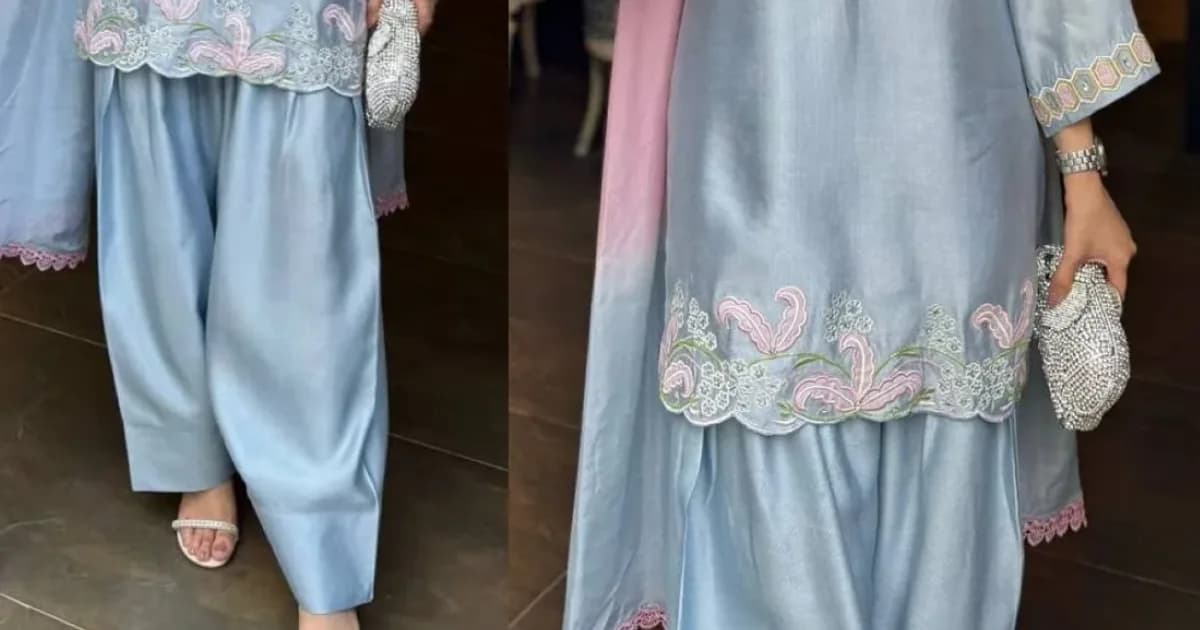
The fashion world has always had a fascination with the past, but 2026 is seeing that fascination take a particularly elegant turn. The Farshi Salwar set is emerging as one of the most talked about traditional silhouettes, bringing dramatic proportions, flowing fabrics, and old world elegance into contemporary wardrobes.
Once associated with royal courts and formal dressing, the Farshi Salwar now appears in modern interpretations that feel luxurious without being overly elaborate. Its resurgence reflects a broader interest in heritage clothing, craftsmanship, and silhouettes that offer something different from conventional ethnic wear.
The appeal is easy to understand. The Farshi Salwar is dramatic without being loud, traditional without looking dated, and versatile enough to suit different modern dressing styles.
What makes the Farshi Salwar so distinctive?
The defining characteristic of a Farshi Salwar is its generous volume and exceptionally long, flowing silhouette. Unlike a conventional salwar that narrows towards the ankle, the Farshi version uses considerably more fabric, allowing the lower garment to fall dramatically towards the floor.
The name itself is linked to farsh, meaning floor, reflecting the garment's characteristic floor-grazing appearance.
Traditionally, this silhouette was associated with formal South Asian dressing, where elaborate fabrics, detailed craftsmanship, and graceful movement were central to the overall aesthetic. Today, designers are interpreting the idea through updated cuts, fabrics, and styling.
The result is a silhouette that immediately creates presence.
Rather than depending entirely on heavy embellishment, the Farshi Salwar creates visual interest through proportion. The movement of the fabric becomes part of the outfit, giving it a fluid quality that photographs beautifully and feels especially striking when worn at weddings or festive gatherings.
Why is the Farshi Salwar trending in 2026?
The return of the Farshi Salwar is part of a larger movement towards heritage inspired fashion. Contemporary wardrobes are increasingly making space for traditional silhouettes that carry a sense of history while still allowing room for individuality.
For modern
The Farshi also fits perfectly into the current preference for statement silhouettes. After years of minimalist tailoring and streamlined ethnic outfits, an exceptionally wide and flowing silhouette feels fresh again.
Social media has further accelerated the trend. Fashion that moves well on camera has an obvious advantage in an era dominated by visual platforms. A Farshi Salwar creates dramatic movement when walking, posing, or turning, making it naturally suited to fashion photography and short-form content.
Its visual character has helped transform a historically significant garment into a
A royal silhouette gets a modern makeover
One reason the Farshi Salwar feels relevant today is that it does not need to be recreated exactly as it appeared historically.
Modern designers and wearers are adapting the silhouette according to current tastes. Traditional fabrics can be replaced or combined with lighter contemporary materials. Long kurtas can be paired with the voluminous bottom, while shorter or more structured tops can create a sharper contrast.
This flexibility allows the Farshi to move between traditional and contemporary aesthetics.
An elaborate silk set with detailed embroidery and a heavily embellished dupatta can create a distinctly regal appearance. Meanwhile, a lightweight Farshi paired with a simpler kurta can feel much more relaxed.
The silhouette remains recognisable, but the styling changes its personality.
That adaptability is one of the key reasons the trend has found such a strong connection with today's fashion audience.
Embroidered details add to its luxury appeal
While the silhouette is undoubtedly the star, surface detailing can elevate the Farshi Salwar even further.
An
Not every Farshi needs to be heavily decorated, however.
Minimal embroidery can look equally sophisticated, particularly when paired with luxurious fabric and carefully considered accessories. Tonal detailing is another way to create an understated appearance while maintaining the richness associated with traditional Indian fashion.
The
This makes every interpretation feel slightly different, even when the underlying silhouette remains the same.
Farshi Salwar vs other traditional silhouettes
The Farshi Salwar is sometimes compared with other voluminous ethnic silhouettes such as the sharara, gharara, and palazzo. While they can share similarities in volume, their construction and overall visual effect are different.
A sharara generally creates a dramatic flare from the waist or upper leg, while a gharara traditionally features a more defined construction with a gathered or fitted section before the flare.
The Farshi, on the other hand, is distinguished primarily by its exceptional length and floor skimming volume.
It also differs from a traditional
That difference is important because it explains why the Farshi feels so distinctive in today's ethnic fashion landscape.
How is personal style changing the Farshi trend?
The modern Farshi Salwar is not about following a single formula. Its revival has opened the door for experimentation, allowing wearers to adapt the garment to their own
Someone drawn to traditional dressing might choose rich jewel tones, classic embroidery and a long dupatta. Another person might select a neutral palette, minimal jewellery and a shorter kurta for a more contemporary interpretation.
The same silhouette can therefore look dramatically different depending on how it is styled.
Accessories play an important role as well. Traditional jhumkas, bangles and embellished footwear can reinforce the heritage aesthetic, while sculptural earrings, a structured handbag or minimal jewellery can create a more modern contrast.
Even the dupatta can completely change the appearance of the outfit. A heavily embroidered dupatta creates grandeur, while a lightweight sheer layer can make the look feel softer and more effortless.
This freedom is particularly relevant to today's fashion culture, where individuality often matters as much as following a trend.
Why is it perfect for festive fashion?
The Farshi Salwar naturally lends itself to celebrations.
Indian weddings, festive dinners, Eid gatherings, engagement ceremonies, and other special occasions often call for clothing that feels more expressive than everyday wear. The Farshi delivers that sense of occasion while offering an alternative to the more familiar lehenga or Anarkali.
Its sweeping silhouette gives the wearer a sense of grandeur, while the traditional construction keeps it rooted in South Asian fashion.
For daytime events, softer shades such as ivory, blush, powder blue, or muted green can create an elegant appearance. Evening celebrations can accommodate deeper colours, metallic accents, and more elaborate embellishment.
The versatility also means that the Farshi can be dressed up or down depending on the occasion.
The influence of social media on the Farshi revival
There is a clear relationship between the renewed interest in heritage fashion and the way people discover clothing today.
A striking silhouette can travel quickly through Instagram, Pinterest and short-form video platforms. The Farshi Salwar has several qualities that make it particularly suited to this environment: movement, volume, craftsmanship and an instantly recognisable shape.
A simple photograph can communicate its dramatic proportions, while video highlights the way the fabric moves.
However, its popularity is not only about visual appeal. Social media has also made it easier for younger audiences to discover traditional silhouettes that may not have been part of their everyday wardrobes.
This has contributed to a broader diversity in the way heritage fashion is presented, styled, and interpreted.
The new meaning of traditional fashion
The Farshi Salwar's popularity also reflects a changing relationship with traditional clothing.
Traditional fashion is no longer limited to reproducing historical garments exactly as they once existed. Instead, heritage can become a starting point for experimentation.
Designers can preserve the defining elements of a silhouette while changing proportions, fabrics, colours and styling. Wearers can then personalise those interpretations further.
That creates a more dynamic relationship between history and contemporary fashion.
The Farshi Salwar is a particularly strong example because its defining shape is so recognisable. Even when the fabric or styling changes, the flowing floor length silhouette immediately communicates its heritage.
How to style a Farshi Salwar set in 2026?
For a classic festive look, pair an embroidered Farshi with a coordinated kurta, statement earrings, and a flowing dupatta. Traditional footwear can complete the ensemble without competing with the dramatic lower silhouette.
For a contemporary appearance, choose a shorter kurta and keep the accessories restrained. A monochromatic Farshi set can also create a sophisticated, editorial effect, particularly when the fabric has subtle texture.
If the outfit already features extensive embroidery, consider keeping the jewellery simpler. Conversely, a relatively plain Farshi can become the perfect canvas for statement earrings or an embellished dupatta.
The key is proportion. Because the Farshi already carries substantial volume, balancing it with the right upper silhouette and accessories can make the entire outfit appear more refined.
Will the Farshi Salwar remain relevant?
The Farshi Salwar's current popularity may have been amplified by social media, but its appeal extends beyond a viral moment.
Its historical roots, distinctive proportions, and adaptability give it qualities that can continue to evolve with changing fashion preferences. Rather than being tied to one particular aesthetic, the silhouette can move between maximalist festive dressing and understated contemporary styling.
That flexibility matters.
Fashion trends come and go, but garments with a strong design identity often have greater room for reinterpretation. The Farshi Salwar already has that identity.
Its resurgence in 2026 demonstrates that traditional fashion can feel current when it is approached with creativity rather than treated simply as nostalgia.
The Farshi Salwar set is ultimately having its moment because it brings together several qualities modern fashion continues to value: heritage, craftsmanship, individuality, movement and visual impact.
Its journey from historical formalwear to a renewed contemporary favourite is a reminder that fashion does not always move forward. Sometimes, the most exciting new look is one that has been waiting in the archives to be rediscovered.
