
Anyone who has attended a December wedding in North India knows the dilemma. You spend weeks choosing the perfect outfit, and then the venue turns out to be an open lawn at 9 pm with the temperature at 8°C. Suddenly the question is whether to look good or stay warm.
A well-chosen shawl fixes this. It keeps you warm, and it can lift an outfit that was already lovely. A puffer jacket over an embroidered lehenga is a crime against fashion, but a hand-embroidered shawl draped over the same lehenga looks deliberate and elegant.
Here is how to pick, drape and carry a shawl so it looks like part of the outfit and not a last-minute rescue.
A Comfort Shawl Beats a Jacket at Winter Weddings
Winter weddings call for a little extra warmth, but that doesn’t mean you have to hide your outfit under a bulky jacket. A beautiful shawl can keep you cosy while letting your lehenga, saree or kurta take centre stage.
You can wear it over both shoulders, let it fall across one arm or style it like an extra dupatta layer. Choose a shawl with a rich border, subtle embroidery or a contrasting color to add something special to your wedding look. The best part? You can wear it long after the celebrations are over.
Match the Shawl to the Outfit
This is where most styling mistakes happen. The rule of thumb is simple: if the outfit is loud, keep the shawl quiet, and if the outfit is simple, let the shawl speak.
With a lehenga:
Lehengas already carry a lot of embroidery, sequins or zari. A second heavily worked piece will fight it.
Pick a solid shawl in a shade picked from the lehenga, such as ivory, champagne, soft gold or deep wine.
Choose a border-only design if you want detail without chaos.
Drape it loosely off the shoulders and let the dupatta sit separately, or skip the dupatta and use the shawl as your main layer.
With a saree:
A saree plus a shawl is a classic combination, and it’s easy to get right.
Plain or lightly woven sarees (silk, organza, georgette) pair beautifully with an embroidered shawl.
Wear the shawl over both shoulders, letting the saree pallu peek out underneath.
Avoid heavy shawls on very delicate sarees, since the weight can drag the drape down.
With an anarkali, sharara or suit set:
These silhouettes have a lot of flare, so a shawl that’s too bulky makes the outfit look shorter and wider.
A fine pashmina or a light woven stole works best.
Try a contrasting colour. A rust shawl on a bottle green suit looks effortless.
Pull it forward across the chest instead of letting it hang straight, which keeps the flare of the outfit visible.
With a sherwani or kurta (for men):
Men can wear shawls just as stylishly, and it’s an underused option.
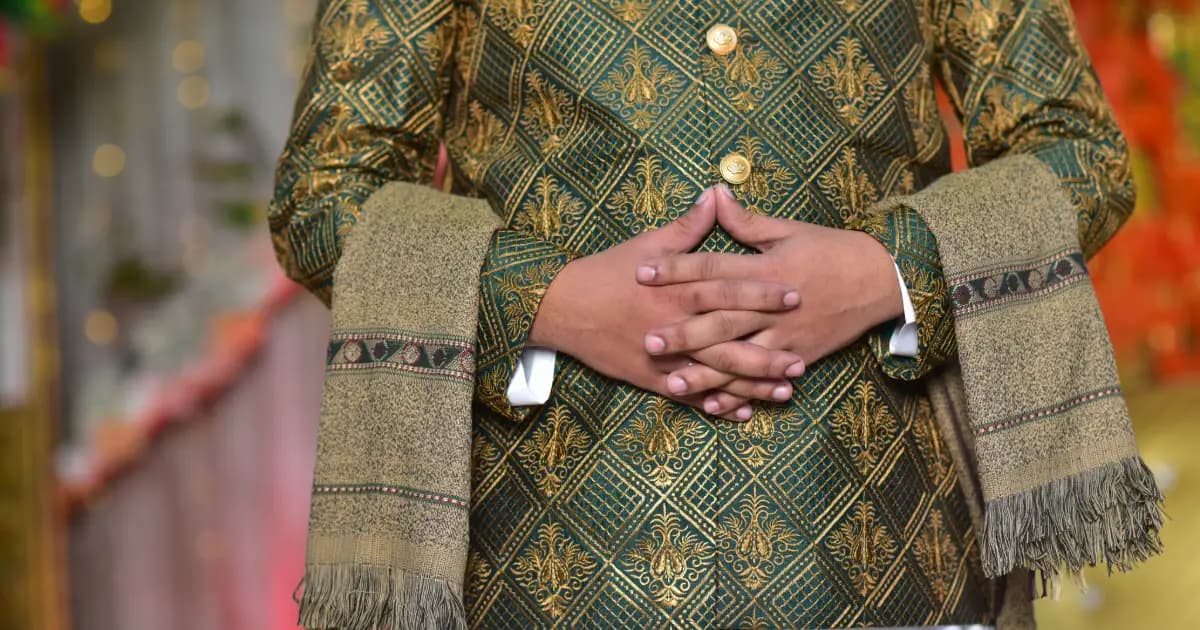
A pashmina or Kani stole over one shoulder looks sharp on a plain sherwani.
Keep the colour tonal. Cream on ivory, or charcoal on black, is always safe.
Skip heavy patterns if the sherwani itself is embroidered.
Color Combinations That Rarely Fail
Red or maroon outfit: ivory, gold or deep emerald shawl.
Pastel outfit (powder blue, blush, mint): pearl white, silver-grey or a slightly deeper tone of the same colour.
Black or navy outfit: burgundy, mustard or a soft cream.
Emerald or bottle green outfit: rust, beige or antique gold.
White or ivory outfit: almost anything, though dusty rose and muted gold feel especially warm.
Don’t Forget the Accessories
A shawl changes how everything else looks, so adjust the rest of your styling accordingly.
Jewellery: If the shawl has heavy embroidery, go lighter on necklaces and let earrings do the talking. With a plain shawl, you can wear a statement necklace.
Hair: Open hair can tangle in a shawl, and a low bun or side braid keeps things neat. Jhumkas and chandbalis show up better when your hair is tied back.
Footwear: Winter weddings often mean cold floors. Embellished juttis with warm socks, or closed-toe heels, keep your feet warm without ruining the look.
Bag: A small potli or clutch keeps your hands free to manage the shawl.
We’ve covered this in more depth in our festive season accessories styling guide, which is worth a read before you shop.
Common Mistakes to Avoid
Even well-dressed guests slip up on a few things:
Competing patterns: A heavily embroidered shawl on an already heavy outfit makes both look cluttered.
Wrong weight: A thick woollen shawl on a delicate silk saree will drag and crease it.
Ignoring the neckline: A beautiful blouse back or neckline should not be hidden completely. Drape so some of it stays visible.
Wearing it all night in the same way: Change the drape between the ceremony, dinner and dance floor.
Skipping the mirror test: Check how the shawl looks from the back and the side, because that’s what cameras catch.
Frequently Asked Questions
1. Can I wear a shawl with a heavy bridal lehenga ?
Yes, and many brides do. Choose a plain or lightly bordered shawl in a matching or complementary shade, and drape it loosely over the shoulders or arms so it doesn’t flatten the outfit’s embroidery.
2. Which color shawl is best for a winter wedding ?
Ivory, gold, champagne, deep wine and emerald are the safest choices because they pair with most outfits. If your outfit is already bright, stick to neutrals.
3. How do I keep a shawl from slipping off my shoulders ?
Pin it discreetly on the inside with a small brooch or safety pin, or tuck it into a slim belt. A slightly heavier fabric also sits better than a very slippery one.
4. Is pashmina worth the price for one wedding ?
If you’ll use it for years, yes. A good shawl lasts through many winters and can be passed down. If you only need it once, a quality wool blend will serve you well at a lower cost.
Styling a shawl for a winter wedding comes down to a few simple choices: pick the right fabric, let it balance your outfit instead of competing with it, drape it in a way that suits the occasion, and look after it once the festivities are over. Do that, and you’ll stay warm without compromising your look.
