
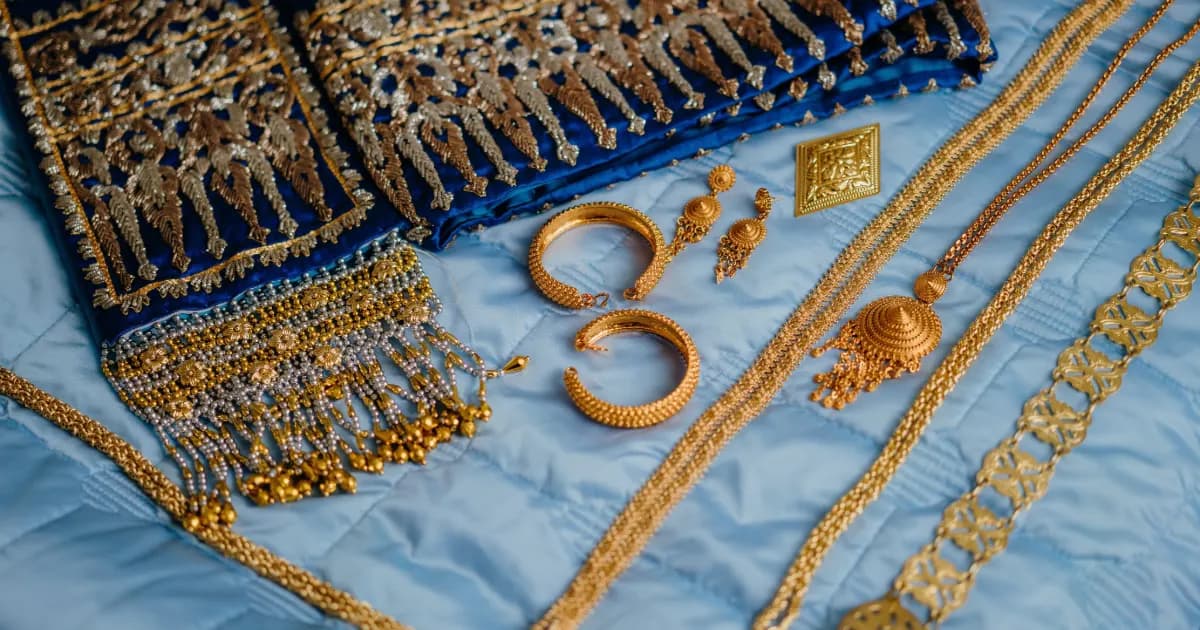
The Indian festive season is a celebration of colour, craftsmanship and personal style. From Diwali and Navratri to Durga Puja, Karwa Chauth and wedding festivities, traditional clothing often takes centre stage, but accessories are what bring the entire look together.
A beautifully chosen pair of earrings can transform a simple kurta, while a statement necklace can add character to a classic saree. Even smaller details such as bangles, footwear, handbags, and hair accessories can make an outfit feel more considered.
The key to Indian festive season accessories styling is not wearing everything at once. Instead, it is about creating balance between the outfit, jewellery, and finishing details while allowing your individual personality to show through.
Start with the outfit
Before selecting accessories, consider the outfit you plan to wear. The colour, fabric, neckline, embroidery, and overall silhouette should influence your accessory choices.
A heavily embroidered lehenga may already have plenty of visual interest, making refined jewellery a better choice. On the other hand, a plain silk saree or solid-coloured anarkali provides an excellent canvas for statement accessories.
Think about contrast as well. Gold jewellery can complement warm colours such as red, maroon, orange and mustard, while silver or oxidised pieces can work beautifully with cooler shades. Pearls can bring softness to pastel outfits, while colourful gemstones can introduce another layer of personality.
The objective is to make every element feel connected rather than competing for attention.
Make jewellery the focal point
Jewellery remains one of the most important elements of festive styling. Indian jewellery offers an enormous variety of designs, from traditional temple-inspired pieces to contemporary geometric creations.
For a statement look, choose one dominant jewellery piece. A dramatic choker can become the centre of attention with a saree, while oversized jhumkas can add enough detail to a relatively simple outfit.
Layering can also work beautifully when done thoughtfully. Multiple necklaces of different lengths can create dimension, particularly with deeper necklines. Bangles and bracelets can be stacked to create movement, while rings can add subtle finishing touches.
However, balance matters. If you are wearing an elaborate necklace and statement earrings, additional accessories should be more restrained.
Explore the beauty of ethnic jewellery
Traditional Indian jewellery continues to evolve while maintaining its cultural character. Kundan, Polki, Meenakari, temple jewellery and handcrafted silver designs each offer a different aesthetic.
Kundan jewellery can complement heavily embellished festive outfits, while Meenakari brings vibrant colour into the overall appearance. Temple-inspired jewellery can work particularly well with silk sarees and traditional South Indian-inspired ensembles.
For a more relaxed celebration, handcrafted or oxidised jewellery can give an outfit an artistic, effortless quality.
There is also growing room to
This allows you to embrace heritage without making your entire outfit look strictly traditional.
Choose earrings according to your hairstyle
Earrings can change the appearance of your entire face and hairstyle, so they deserve more consideration than they often receive.
If you are wearing your hair in a sleek bun or traditional updo, statement jhumkas, chandbalis, or long earrings can frame the face beautifully. Open hairstyles may work better with earrings that have enough structure to remain visible without becoming tangled.
For minimal festive outfits, oversized earrings can provide the main
Face shape can also influence your choice. Long earrings can visually elongate the face, while rounded designs can soften sharper features. Ultimately, comfort should remain part of the decision, especially when attending celebrations that last several hours.
Style bangles and bracelets with intention
Bangles have long been associated with Indian festive dressing, but modern styling offers plenty of flexibility.
Instead of matching every bangle to your outfit, consider combining different textures and finishes. A few traditional bangles can be mixed with slimmer metallic bracelets or contemporary cuffs.
You can also use bangles to introduce a secondary colour. For example, a neutral outfit can be paired with colourful glass bangles, while a bright ensemble may benefit from gold or silver-toned pieces.
The same principle applies to bracelets. If your sleeves are heavily embellished, keeping wrist accessories minimal can prevent the outfit from feeling visually crowded.
Don't forget the maang tikka
A maang tikka can instantly make an outfit feel more festive. It is particularly suited to lehengas, sarees, and other traditional ensembles.
For elaborate outfits, a delicate tikka can provide a refined finishing detail. Larger designs can work when the rest of the jewellery is carefully coordinated.
You do not necessarily need a complete bridal style jewellery set to wear a maang tikka. Contemporary versions are available in minimalist shapes that can complement festive clothing without making the look overly formal.
For a more distinctive appearance, consider matching the tikka to the metal or stone details already present in your earrings or necklace.
Give your handbag a fashion role
A handbag may be practical, but it can also become an important part of your festive look.
Potli bags remain a natural choice for Indian celebrations, particularly when paired with sarees and lehengas. Embroidered clutches, metallic bags and embellished mini bags can also complement traditional outfits.
When selecting a festive bag, look beyond colour. Texture can be equally important. Velvet, brocade, metallic finishes, embroidery and beadwork can add depth to an otherwise simple outfit.
At the same time, avoid matching every accessory exactly. A bag in a complementary shade can often look more sophisticated than one that precisely copies the colour of your outfit.
Choose footwear for style and comfort
Festive footwear should balance appearance with practicality. Juttis, mojaris, embellished sandals and traditional heels can all work with Indian outfits.
For a heavily embroidered lehenga, footwear with subtle detailing can prevent the look from becoming excessive. With a simpler kurta set, decorative juttis can become a charming focal point.
Comfort becomes especially important during festivals because celebrations often involve standing, walking, and socialising for long periods. A beautiful pair of shoes is of little use if they make it difficult to enjoy the occasion.
Choose footwear that complements your outfit while allowing you to move comfortably.
Mix traditional and contemporary accessories
Modern festive fashion does not require every accessory to be
Try pairing a classic silk saree with sculptural earrings, or style a traditional lehenga with a contemporary metallic clutch. A simple kurta can be elevated with layered necklaces and modern rings.
This is where you can experiment with proportions, materials, and combinations.
The idea is not to abandon tradition but to interpret it in a way that feels natural to you. Fashion becomes more interesting when familiar elements are presented from a fresh perspective.
Consider the occasion
Different festive occasions call for different levels of accessorising.
A daytime family gathering may suit delicate jewellery, a printed saree and understated footwear. An evening Diwali celebration could provide an opportunity for statement earrings, metallic accents and a more dramatic clutch.
For religious ceremonies, you may prefer traditional jewellery and more understated styling. For festive parties, contemporary accessories can introduce a more fashion-forward element.
Considering the setting before getting dressed can help you avoid both over-accessorising and under-styling.
Pay attention to metal choices
Metal plays an important role in creating a cohesive festive look. Gold remains a classic choice for Indian occasionwear, while silver, rose gold and mixed metal jewellery offer contemporary alternatives.
Rather than focusing exclusively on value, consider craftsmanship, proportion and how the piece interacts with your clothing.
Mixed metals can also work when there is a deliberate connection between the pieces. For example, a gold necklace paired with a bracelet containing both gold and silver details can create continuity.
Let your personal style lead
The most memorable festive looks usually feel authentic to the person wearing them. Trends can offer inspiration, but they should not dictate every decision.
If you naturally prefer minimal fashion, you do not need layers of jewellery simply because it is the festive season. A single pair of statement earrings with a beautiful saree can be enough.
Similarly, if you enjoy maximalist styling, you can embrace layered necklaces, bangles, rings, and decorative hair accessories while maintaining a sense of balance.
Indian festive fashion has always allowed room for individuality. What has been worn traditionally can be reinterpreted through colour, styling, and proportion.
Create balance through details
Accessories should enhance an outfit rather than hide it. One useful approach is to identify the visual focus before getting dressed.
If your blouse has intricate embroidery, let it remain visible. If your saree features a dramatic border, choose jewellery that complements rather than competes with it. If your outfit is minimal, accessories can provide the decorative element.
This approach makes festive styling feel intentional.
The beauty of Indian fashion lies in its ability to combine craftsmanship, heritage, and personal expression. Whether you choose classic gold jewellery, colourful bangles, an embroidered potli, or contemporary statement pieces, the right accessories can transform an outfit into a complete festive look.
As the festive season approaches, there is no need to follow a single formula. Mix textures, explore new combinations, and choose pieces that make you feel comfortable and confident. When tradition meets individuality, festive styling becomes much more than dressing up. It becomes a way to express your own connection with celebration, culture, and style.
