Some fashion trends are made for a season. Chikankari keeps finding its way into the next one.
While
What makes Chikankari stand apart is not simply its intricate detailing. It is the connection between craftsmanship, heritage and contemporary fashion. Every embroidered motif carries the visual language of a craft that has been shaped by generations of artisans, while today's designers give it room to speak to a new audience.
This has allowed Chikankari to move beyond being viewed solely as
The cultural craft behind Chikankari
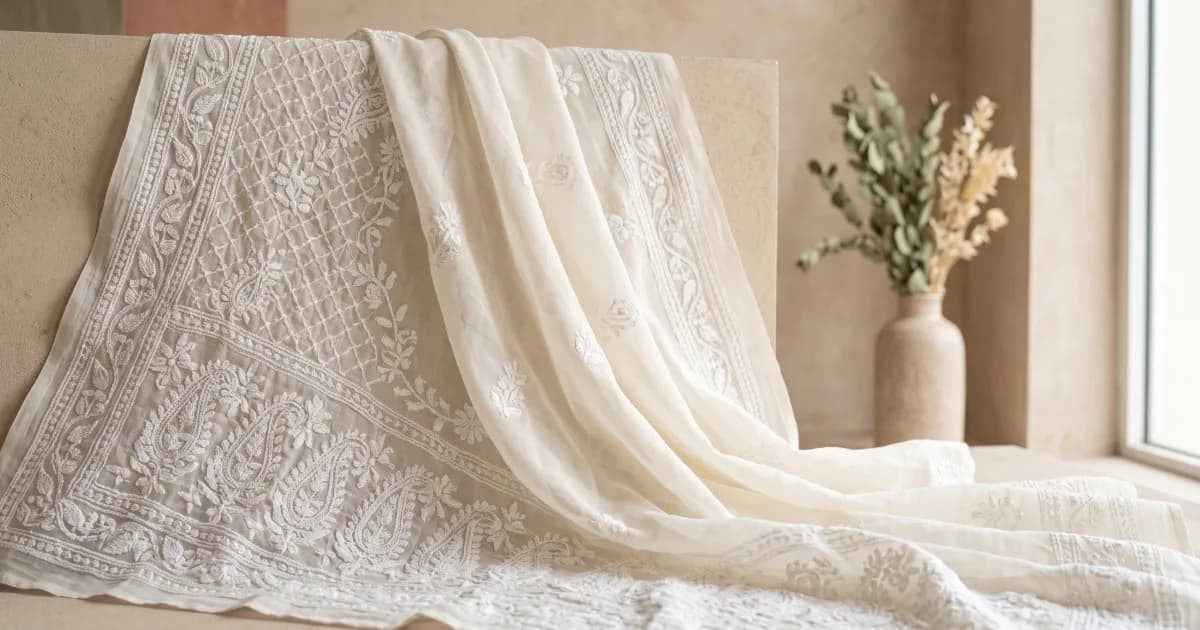
Chikankari is deeply associated with Lucknow and the cultural identity of the region. More than a decorative technique, it represents a tradition of painstaking handwork in which delicate stitches are used to create floral patterns, vines, paisleys, and other fine motifs across fabric.
The beauty of Chikankari lies partly in its subtlety. Instead of relying on heavy embellishment, the craft allows the texture of the fabric and the rhythm of the stitches to create visual interest. Traditional white on white work is particularly known for this understated effect, although contemporary versions now explore a much wider range of fabrics and colours.
Behind every hand embroidered piece is considerable patience and manual skill. The work requires precision, consistency and an understanding of how individual stitches interact with the fabric. This human element gives Chikankari a character that goes beyond the finished design.
Its cultural importance is also reflected in the way the craft has travelled from traditional garments into contemporary fashion. When Chikankari appears on a modern silhouette, the garment carries both a current design perspective and a connection to Indian textile heritage.
Why Chikankari never really goes out of style
One of the defining qualities of Chikankari is its ability to remain recognisable even as fashion changes around it. The embroidery retains its traditional character, while designers continue to experiment with fabrics, cuts, colours and garment formats.
Traditional motifs may now appear on oversized shirts, dresses, jackets, trousers, sarees and modern co-ord sets. These interpretations allow Chikankari to enter contemporary fashion without losing the delicate identity associated with the craft.
Its understated elegance is another reason it continues to attract attention. Fashion preferences may shift from ornate dressing to minimalism and back again, but finely detailed embroidery can work within both approaches. Rather than depending on a particular season, Chikankari draws attention through texture, craftsmanship, and visual detail.
For those who prefer thoughtful purchases, this is particularly appealing. A well-designed embroidered garment can remain useful across different occasions instead of feeling tied to a single fashion moment.
Chikankari and modern fashion aesthetics
Contemporary fashion has created new ways to appreciate traditional craftsmanship. Chikankari is a strong example of how heritage techniques can complement modern
The traditional white on white approach remains one of the most recognisable expressions of Chikankari, but today's interpretations can include pastel shades, jewel tones and deeper neutrals. These variations allow the embroidery to suit different personal styles while preserving its delicate appearance.
Minimalist dressing can benefit from the quiet detailing of Chikankari, while more expressive styling can use it as a foundation for jewellery, statement footwear and layered accessories.
The result is a fashion language that feels rooted yet current. It demonstrates that traditional Indian craftsmanship can participate in modern fashion without having to imitate every passing trend.
From everyday kurtas to statement outfits
For many people, the Chikankari kurta remains the easiest entry point into the craft. It works with straight pants, palazzos, leggings, and even contemporary denim.
A simple cotton kurta with delicate embroidery can create an easy daytime outfit. Add a structured handbag and contemporary footwear, and the same garment can take on a more urban character.
For festive occasions, longer Chikankari Anarkalis, embroidered sets and embellished dupattas offer greater visual impact. These outfits retain the softness associated with the craft while introducing richer styling possibilities.
Chikankari sarees have also become an elegant choice for people who want something traditional without relying on heavy embellishment. The embroidery can provide texture and detail while keeping the overall outfit graceful.
The role of silhouettes in contemporary Chikankari
One of the easiest ways to make Chikankari feel modern is through silhouettes. The embroidery itself may remain rooted in tradition, but the cut of the garment can completely change its personality.
Straight cut kurtas create a clean and refined look. Flared Anarkalis bring movement and a more festive character. Oversized shirts introduce a relaxed, contemporary feel, while cropped jackets and structured layers can turn Chikankari into a statement piece.
Dresses featuring Chikankari offer another modern interpretation. Instead of restricting the craft to ethnic clothing, contemporary silhouettes allow it to enter different areas of the fashion landscape.
The relationship between traditional detailing and modern construction is particularly significant for younger audiences. It allows them to engage with heritage fashion in a way that feels natural to their everyday style.
Easy Chikankari styling ideas
The beauty of Chikankari is that styling does not have to be complicated. In fact, allowing the embroidery to remain visible is often the most effective approach.
For a casual look, pair a lightweight Chikankari kurta with straight-leg trousers or denim. Add minimal jewellery and comfortable flats for an outfit that feels polished without appearing overly dressed.
For festive dressing, consider a Chikankari set with traditional jewellery. Pearl earrings, jhumkas, or delicate bangles can complement the embroidery without overwhelming it.
A monochrome Chikankari outfit can create an especially sophisticated effect. White, ivory, beige, and pastel tones allow the craftsmanship to become the focal point.
For a more contemporary
Why does Chikankari never really go out of style?
Trends often divide fashion audiences by age. Chikankari tends to do the opposite.
Older generations may connect with it through traditional Indian clothing and familiar craftsmanship. Younger consumers can discover it through contemporary cuts, social media styling, and modern fashion collections.
This cross-generational appeal comes from the craft's ability to change its presentation without losing its visual identity.
A mother may choose a classic Chikankari saree, while her daughter might prefer an oversized embroidered shirt or a contemporary co-ord set. Both can enjoy the same craft in completely different ways.
This makes Chikankari more than a particular category of ethnic wear. It becomes a shared design language that can be interpreted differently from one generation to another.
Chikankari as a wardrobe investment
Fashion conversations are increasingly moving toward longevity. Consumers are becoming more conscious of how often they can wear a garment, how easily it can be styled, and whether it can remain relevant beyond one season.
Chikankari fits naturally into this approach because its appeal is closely connected to craftsmanship rather than novelty.
A well-made embroidered piece can move between occasions with relatively small styling changes. The same kurta might work for a workday, a family gathering, or a casual weekend depending on the accessories and footwear.
The key is choosing colours, fabrics, and silhouettes that complement your existing wardrobe. Instead of selecting Chikankari simply because it is trending, consider pieces that reflect your personal style and can be worn in different settings.
Preserving craft while embracing change
The continuing presence of Chikankari in contemporary fashion raises an important point about cultural craftsmanship: tradition does not have to remain unchanged to remain meaningful. When designers reinterpret Chikankari through new fabrics, colours and silhouettes, they create another pathway for audiences to encounter a craft with deep roots in Indian textile culture.
At the heart of that process are the artisans whose skill gives the embroidery its distinctive character. The fine stitches, carefully placed motifs, and hand-worked details are what transform a simple piece of fabric into something with cultural and visual identity. Recognising that craftsmanship adds depth to the experience of wearing Chikankari, it becomes more than an aesthetic choice.
That connection between the old and the new is where Chikankari continues to find its place. A classic Lucknowi kurta can preserve familiar craft traditions, while a contemporary embroidered shirt or dress can introduce those traditions to someone who may never have considered traditional Indian clothing before. Fashion will keep changing, but Chikankari does not need to chase every new direction. Its strength lies in carrying the skill, visual language, and cultural character of its craft into new forms, allowing heritage embroidery to remain part of how people dress, express themselves, and connect with Indian craftsmanship today.
