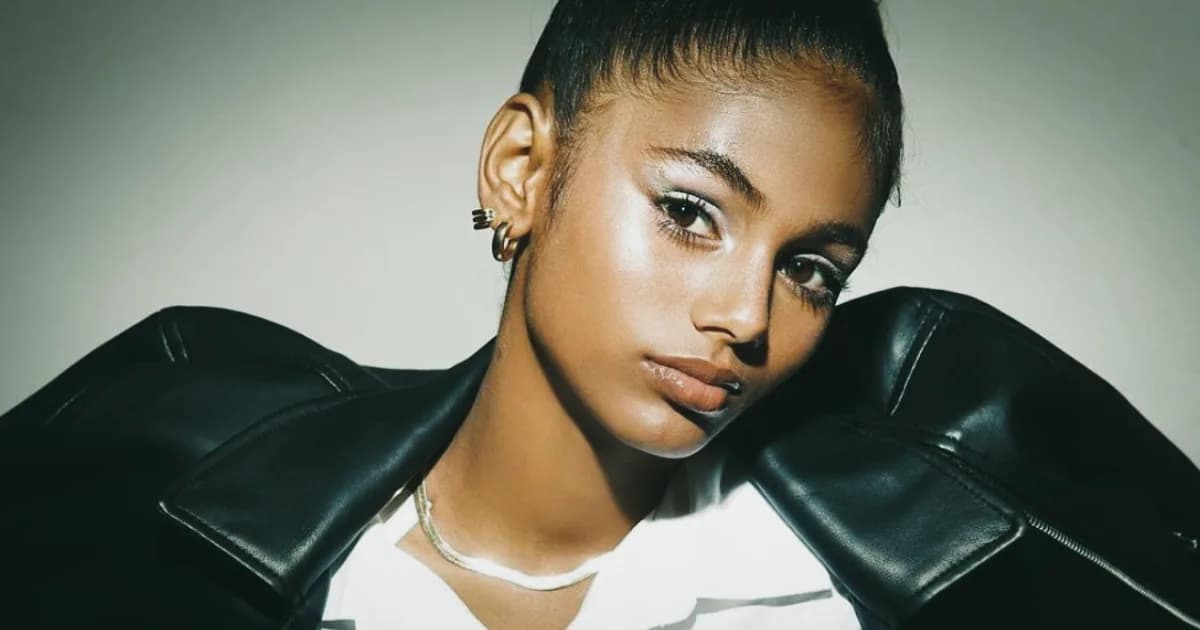
A young girl from Mumbai’s slums enters the fashion world, appears in major publications, becomes the face of a luxury beauty campaign, and builds a growing audience online. That is the story that first made Maleesha Kharwa go viral. But there is more to her journey than a striking headline.
Often called “India’s Slum Princess,” Maleesha has become one of the most recognisable young faces associated with conversations around representation, beauty and changing fashion standards. Her journey began with a childhood dream of becoming a model and took an unexpected turn when she crossed paths with American actor and dancer
From there, social media helped bring her story to audiences far beyond her neighbourhood. Fashion publications followed, modelling opportunities grew, and her distinctive look began attracting attention from the beauty industry.
Her rise is particularly interesting because it challenges the familiar image of where a fashion career is supposed to begin. Maleesha did not enter the spotlight through an established fashion family or traditional industry network. Her visibility grew through a combination of ambition, digital exposure, media interest, and professional opportunities.
Today, her name is closely connected with a new conversation around who gets seen, celebrated, and represented in Indian fashion.
Who is Maleesha Kharwa?
Maleesha Kharwa is an Indian model and social media personality from Mumbai. She grew up in difficult financial circumstances and lived with her family in a makeshift home in the city before her modelling career began to develop.
From an early age, Maleesha was interested in modelling and dancing. Her ambitions were remarkably clear despite the limitations of her circumstances.
That contrast became an important part of the public interest surrounding her. The fashion industry is traditionally associated with polished portfolios, agencies, expensive shoots and established networks. Maleesha's story followed a very different route.
Her journey would eventually take her from aspiring model to magazine cover subject, beauty campaign face and social media
The unexpected meeting with Robert Hoffman
Maleesha's story took a major turn in 2020 when she met American actor, dancer and choreographer Robert Hoffman in Mumbai.
Hoffman was in India when the COVID-19 pandemic affected his plans. During his time in Mumbai, he encountered Maleesha and became interested in helping her pursue her modelling ambitions.
The meeting eventually helped Maleesha gain a social media presence and wider exposure. Her story began attracting attention online, where photographs and updates introduced her to audiences outside Mumbai.
For someone who had already dreamed of becoming a model, the opportunity represented a significant opening.
It is also one of the most intriguing parts of her story because it highlights the unpredictable ways in which careers can begin in today's digital fashion landscape. A chance encounter can create visibility, but turning that visibility into a career requires continued work, professional opportunities, and the ability to navigate a very competitive industry.
From viral story to fashion recognition
Going viral can create attention overnight, but fashion credibility is built over time.
For Maleesha, growing online visibility eventually translated into opportunities within fashion and beauty. Her story attracted coverage from publications including
The attention was not based solely on her background. Her appearance, confidence, and potential as a model also became central to how she was presented.
This distinction matters.
Internet virality can disappear quickly, while professional modelling depends on creating a recognisable visual identity. Maleesha's growing portfolio helped move her story beyond a viral moment.
Her journey also
Maleesha Kharwa and the changing face of Indian beauty
Perhaps the most significant part of Maleesha's story is its connection to India's long-running conversation about beauty standards.
Maleesha has spoken publicly about facing comments about her darker complexion and being told that her skin tone could make modelling difficult.
Those experiences reflect a wider issue. Colourism has influenced beauty ideals across South Asia for generations, with lighter skin historically receiving disproportionate representation in advertising and popular culture.
Maleesha's growing visibility offers a different image.
Her appearance has not been presented as something that needs to be changed before she can participate in fashion. Instead, her distinctive features have become part of her modelling identity.
That does not mean one model can transform an entire industry. However, greater visibility for a wider range of appearances can contribute to a broader understanding of what beauty can look like.
For younger audiences watching her journey, that representation can be meaningful.
Her connection with Cosmopolitan
A major moment in Maleesha's rise came through fashion media.
Cosmopolitan India featured her story and explored her ambitions, upbringing, and experiences as an aspiring model. The coverage helped introduce her journey to readers already interested in fashion, beauty, and youth culture.
Being featured by a recognised fashion publication also gave her story a different kind of credibility.
Social media may have helped Maleesha get discovered, but editorial coverage placed her within a wider fashion narrative.
It also highlighted the tension between her public nickname and her ambitions. While “Slum Princess” is memorable and has played a role in how her story is discussed online, Maleesha's career encompasses much more than the circumstances in which she grew up.
She is a model, a young fashion personality, and a digital creator developing her own public identity.
From Instagram visibility to influencer culture
Social media has fundamentally changed how audiences discover models.
Before platforms such as Instagram became central to fashion culture, aspiring models generally depended on agencies, casting directors, photographers, and magazine editors to discover them.
Today, the process is much more fluid.
Maleesha's story demonstrates this
Her social media identity has also allowed her to communicate directly with an audience.
This is particularly important for younger models. Building a career now often involves more than walking a runway or appearing in a campaign. Personal branding, visual storytelling, and audience engagement can all influence how a model is perceived.
Maleesha's online presence has therefore become an important part of her professional identity.
The Forest Essentials campaign
Maleesha reached another significant milestone when she became associated with Indian luxury skincare brand Forest Essentials.
In 2023, she became the face of the brand's Yuvati campaign, which targeted a younger audience.
The campaign represented a striking change in context for Maleesha. Her early story had largely been discussed through the lens of her upbringing and discovery. A luxury beauty campaign shifted attention toward her role within the beauty industry itself.
The campaign also
For Maleesha, it demonstrated that her appeal could extend beyond viral storytelling and into established commercial fashion and beauty spaces.
Why Maleesha Kharwa's story resonates
Maleesha's popularity cannot be explained by a single factor.
Her story combines fashion, social media, representation, ambition, and an unexpected career trajectory. Each element gives audiences another reason to follow her journey.
There is also a strong visual component.
Fashion audiences naturally respond to transformation, distinctive personal style and new faces. Maleesha's modelling photographs provide the visual language expected from fashion content, while her background creates the personal story behind those images.
That combination has helped her stand out in a crowded digital environment.
Her journey also reflects the changing relationship between celebrity and social media. A person no longer needs to follow the traditional route from a modelling agency to magazine to mainstream recognition. Digital platforms can accelerate discovery and create direct connections between emerging talent and audiences.
Beyond the “Slum Princess” label
The phrase “Slum Princess” has become inseparable from Maleesha's public story, but it is worth looking beyond the nickname.
The label immediately communicates the dramatic contrast between her early circumstances and her later access to fashion and beauty spaces. At the same time, repeatedly defining her through poverty risks overshadowing the person she is becoming professionally.
Maleesha's career is increasingly about her work as a model rather than simply the circumstances of her childhood.
That distinction becomes more important as her career develops. The longer she remains visible in fashion, the more her portfolio, personal style, collaborations, and professional choices can shape how audiences understand her.
What comes next for Maleesha Kharwa?
Maleesha's story is still developing.
Her early years have taken her from aspiring model in Mumbai to magazine features, professional modelling opportunities, and a luxury beauty campaign. Social media has also given her a direct platform to connect with a growing audience.
Now, she is entering a new chapter as an entrepreneur with Maleesha by Maleesha, her own jewellery line. The venture marks a shift from being the face of brands to creating products under her own name and building a business around her personal style.
The jewellery collection allows her to explore another side of the beauty and lifestyle space while strengthening her identity as a creator. It also reflects how today's young personalities can move beyond traditional modelling roles and build independent brands through their digital presence.
What makes Maleesha's story particularly interesting is the combination of modelling, social media, beauty, representation, and entrepreneurship. Each stage has introduced her to a different audience and expanded the possibilities available to her.
