.webp&w=3840&q=75)
The Evolution of Indian Fashion on the Global Stage
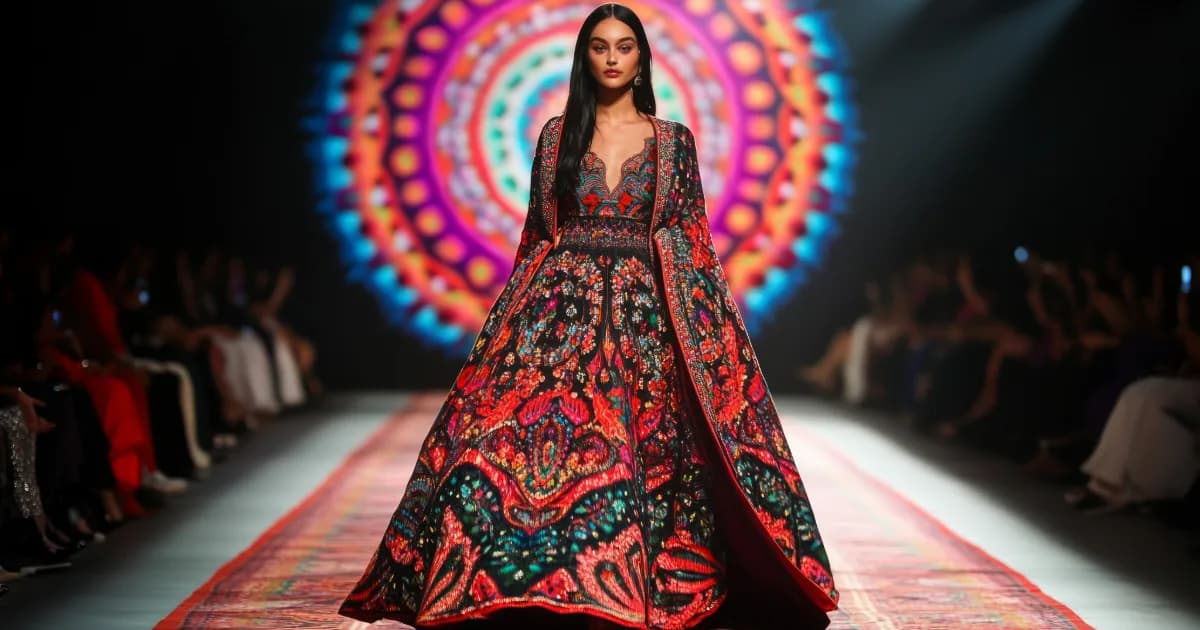
Indian designers have steadily transitioned from niche ethnic showcases to becoming major highlights on international fashion calendars. Over the past decade, the global runways of Paris, Milan, London, and New York Fashion Week have seen Indian names breaking stereotypes, redefining aesthetics, and bringing culture and traditions. into contemporary style.
Today, Indian design is no longer confined to bridal couture or festive wear—it’s a movement of identity and artistry that reflects a blend of the past and present. From
The Fusion of Heritage and Modernity
Indian designers have mastered the art of marrying heritage techniques with global fashion sensibilities. The rich legacy of craftsmanship—
Designers like Rahul Mishra, Gaurav Gupta, and Manish Arora have championed the philosophy that Indian heritage need not be confined to ethnic attire. Mishra, for instance, has brought Zardozi, mirror work and intricate embroidery into haute couture gowns that have graced the Paris runway, turning centuries-old crafts into modern art pieces.
Gaurav Gupta’s sculptural designs reinterpret Indian drapery into futuristic silhouettes that resonate with global luxury audiences. His work bridges couture with innovation—proof that Indian fashion is as forward-thinking as it is rooted in culture and traditions.
From Sarees to Streetwear: A Global Transformation
Once seen as traditional attire, sarees are now being reimagined as a universal garment—flexible, empowering, and endlessly versatile. Designers like Sabyasachi and Tarun Tahiliani have given the saree an international appeal, using lighter traditional fabrics and modern styling to attract younger, global audiences.
But it’s not just couture. Indian designers are also leaving a mark on casual wear and global streetwear. From
This cross-cultural blend signifies a global fashion language where plain skirts and oversized T-shirts are paired with handcrafted jackets or embroidered dupattas—a dialogue between East and West.
Craftsmanship: The Soul of Indian Fashion
Behind the glittering shows lies a powerful story of artisanship. India’s diverse textile traditions—from Banarasi weaves to Kanchipuram silks—have been the backbone of many international collections. Designers are reviving these crafts through collaborations that empower rural weavers and embroiderers, ensuring that the legacy of traditional fabrics remains alive.
The emphasis is no longer just on design but on sustainability and ethical sourcing. The global fashion community now values the handmade, the slow, and the authentic—values India has embodied for centuries. Techniques like Zardozi, mirror work, not only enhance beauty but also carry deep cultural symbolism that connects wearers to generations of artisans.
Indian Designers Dominating International Runways
Rahul Mishra: The Global Storyteller
Rahul Mishra’s journey from small-town India to Paris Haute Couture Week epitomizes the rise of Indian fashion. His collections celebrate nature, hand embroidery, and traditional fabrics, transforming them into poetic narratives. His designs showcase Indian handlooms as wearable art—an approach that’s earned him accolades globally, including the International Woolmark Prize.
Gaurav Gupta: Sculpting the Future
Known for his avant-garde couture, Gupta represents India’s modern voice. His designs have been worn by international icons like Cardi B and Beyoncé, highlighting how Indian craftsmanship can complement global glamour. His architectural use of drapes and metallic tones gives Indian couture a futuristic edge, without losing touch with
Sabyasachi Mukherjee: The Cultural Ambassador
Sabyasachi’s global collaborations—most notably with H&M and Christian Louboutin—have made him a global symbol of Indian luxury. His work showcases the timeless charm of sarees and vintage embroidery, allowing global audiences to embrace Indian silhouettes in everyday wear.
Anamika Khanna: The Minimalist Visionary
Khanna’s ability to merge Indian and Western elements seamlessly has earned her a strong presence at international fashion weeks. Her fusion of Zardozi, mirror work, with contemporary cuts reflects India’s evolution—where tradition meets modern freedom.
The Influence of Bollywood and Pop Culture
Bollywood has long served as India’s fashion muse, and today it acts as a global catalyst. When stars like Priyanka Chopra, Deepika Padukone, or Alia Bhatt wear Indian designers on global red carpets, they redefine India’s image in the global fashion scene.
Priyanka Chopra’s appearances at the Met Gala in intricate Indian-inspired gowns, or Deepika’s Cannes looks featuring traditional fabrics, have helped the world rediscover the richness of Indian aesthetics.
Beyond film stars, global influencers and stylists now embrace Indian craftsmanship as a statement of individuality and sustainability. The appeal of Indian design lies in its ability to merge culture and traditions. with modern global trends—something few other fashion industries achieve so gracefully.
The Sustainability Edge: Fashion with Purpose
As global fashion moves toward responsible practices, Indian designers have a clear advantage. The country’s long-standing commitment to natural fibers, handlooms, and upcycled techniques aligns perfectly with the sustainability movement.
Designers such as Anita Dongre and Payal Jain are creating collections using organic cotton, natural dyes, and traditional fabrics sourced from ethical communities. These sustainable approaches not only promote eco-conscious fashion but also preserve ancestral crafts.
Indian fashion thus becomes more than a visual delight—it’s a movement that supports livelihoods, reduces waste, and promotes mindful consumption.
Global Fashion Weeks: India’s Growing Presence
From Paris to New York, Indian designers are increasingly being invited to showcase collections alongside the world’s elite. At the 2025 Paris Fashion Week, several Indian labels made headlines for their experimental use of Zardozi, mirror work on contemporary silhouettes. Similarly, at New York Fashion Week, designers like Vaishali S and Bibhu Mohapatra presented collections that blended Indian artistry with Western minimalism.
Vaishali S, who became the first female Indian designer to present at Paris Haute Couture Week, turned heads with her stunning manipulation of traditional fabrics. Her designs seamlessly integrated sustainability, craftsmanship, and modern appeal—an ideal representation of India’s creative evolution.
Bibhu Mohapatra, now a household name in New York, continues to use Indian techniques while designing elegant global-ready outfits. His work symbolizes the international acceptance of Indian sensibility—an intersection of sophistication and emotion.
Beyond Borders: The Global Consumer Shift
Today’s global fashion consumer values authenticity and storytelling more than ever. The market’s growing appetite for pieces that reflect culture and traditions. gives Indian designers an edge. Indian labels, once catering to domestic markets, are now shipping globally to clients in London, Dubai, New York, and Tokyo.
The younger generation of designers—like Kanika Goyal and Saaksha & Kinni—are bringing new energy to the scene. Their collections, often featuring plain skirts paired with embroidered jackets or oversized T-shirts with Indian motifs, capture the spirit of global youth culture while staying true to Indian roots.
This new wave represents a generation that embraces diversity and inclusivity—values that align perfectly with global fashion’s evolving identity.
Technology and the Digital Runway
The rise of digital fashion weeks and e-commerce has given Indian designers new global visibility. Virtual shows during the pandemic enabled them to reach audiences far beyond geographical borders.
Brands like Ritu Kumar and Masaba Gupta leveraged digital storytelling, fusing traditional designs with contemporary branding. This digital revolution has allowed fashion houses to showcase collections inspired by
Moreover, the use of AI-driven design tools, AR try-ons, and virtual fashion shows are enabling Indian designers to adapt swiftly to the future, proving that heritage can coexist with innovation.
Education and Global Recognition
Indian fashion education has also evolved, producing world-class talent. Institutions like the National Institute of Fashion Technology (NIFT) and Pearl Academy now emphasize global exposure and industry collaboration. Many graduates now intern or work with brands in Paris and Milan, returning to India with skills that elevate the domestic design scene.
This cultural and educational exchange has expanded the horizons of Indian fashion, helping it claim its rightful place among the world’s top design communities.
Crafting the Future of Indian Fashion
As the fashion world becomes increasingly interconnected, Indian designers stand at the forefront of change—balancing sustainability, craftsmanship, and innovation. The journey from local craft clusters to global couture capitals reflects more than a creative evolution—it’s a story of pride, resilience, and reinvention.
With traditional fabrics, Zardozi, mirror work, and a deep respect for culture and traditions., Indian designers continue to redefine luxury and identity on a global scale. From the elegance of sarees to the minimalism of plain skirts and oversized T-shirts, India’s influence spans styles, continents, and generations—cementing its role as a timeless force in global fashion.
