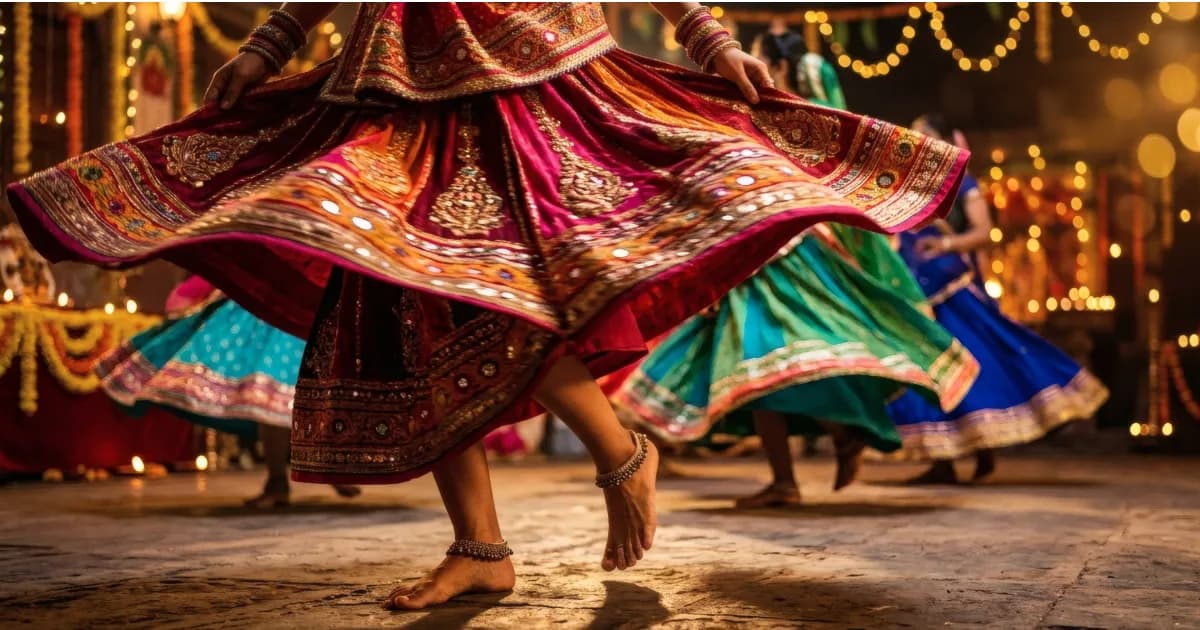
Navratri is the kind of festival where fashion naturally becomes part of the celebration. As the music gets louder, the dandiya sticks come out, and Garba circles fill the night, outfits become an expression of energy, tradition, and personal style. This is why Navratri fashion goes far beyond simply choosing an ethnic outfit. It is about finding a look that feels festive, moves comfortably, and still photographs beautifully.
This season, traditional silhouettes are getting fresh styling updates. Chaniya cholis are being paired with contemporary blouses, mirror work is appearing in unexpected ways, and statement
Whether you are dressing for a Garba night, a family celebration, or a festive gathering, there are plenty of ways to make your Navratri outfit feel current without losing its traditional character.
Chaniya Choli gets a modern update
The chaniya choli remains one of the most recognisable Navratri outfits, but today's styling is anything but predictable. Designers and fashion enthusiasts are experimenting with proportions, fabrics, colours and blouse shapes to give the traditional three-piece ensemble a contemporary feel.
Look for skirts with playful volume, layered panels, intricate embroidery or traditional prints. A heavily detailed skirt can be balanced with a simpler blouse, while a relatively minimal skirt can become more striking when styled with an embellished choli.
For a modern twist, consider an interesting blouse neckline, cropped silhouette, or asymmetric detailing. You can also layer a contrasting dupatta over one shoulder for a look that feels traditional while remaining fashion-forward.
Mirror work remains a festive favourite
Few details capture the visual energy of Navratri quite like mirror work. Its reflective quality catches the light beautifully while dancing, making it particularly suited to evening celebrations.
Instead of choosing mirror work from head to toe, try using it strategically. A skirt with smaller mirrors can be styled with a richly embroidered blouse, or a simple outfit can be elevated with a mirror-work dupatta.
The appeal also comes from its connection to Indian textile traditions. Mirror embellishment has long been associated with regional craftsmanship, particularly in western India, and its presence in contemporary Navratri fashion shows how traditional craft can continue to evolve.
Bandhani and Leheriya bring colour into the look
Navratri is an ideal time to embrace colour, and Bandhani and Leheriya offer two classic ways to do it.
Bandhani is known for its distinctive dotted patterns created through traditional tie-dye techniques. Leheriya, with its characteristic wave-like stripes, brings movement and rhythm to an outfit even before you step onto the dance floor.
You can wear these textiles through a traditional chaniya choli, a contemporary skirt set, or even a dupatta paired with a solid-coloured outfit. Bright pinks, oranges, greens, blues, and yellows can create a lively festive look, while deeper jewel tones offer a more sophisticated interpretation.
For anyone who wants their outfit to reflect Indian
Contemporary crop tops with traditional skirts
If a conventional choli is not your style, a crop top can offer an effortless alternative. Pair a structured or embellished crop top with a traditional flared skirt to create a balance between contemporary fashion and ethnic dressing.
This combination works particularly well when the colours are coordinated. For example, a neutral or metallic top can allow a printed skirt to take centre stage, while a colourful crop top can be paired with a simpler skirt.
A statement belt can also define the waist and add a modern styling element. The result is festive without feeling like a costume, making it suitable for a range of celebrations and social occasions.
Sharara sets for a comfortable festive look
For those who want something different from the traditional chaniya choli, sharara sets are worth considering. Their wide-legged silhouette creates movement while offering a slightly more relaxed alternative to a voluminous skirt.
A heavily embroidered sharara can be paired with a short kurti and dupatta, while a lightweight version works well for longer celebrations. Look for details such as zari, sequins, thread embroidery, or mirror accents to keep the outfit connected to the festive mood.
Comfort matters during Navratri because Garba involves constant movement. An outfit that looks beautiful but restricts your steps can quickly become impractical. A well-fitted sharara therefore makes sense for anyone who wants fashion and function to work together.
Indo-western looks for a fresh take
Navratri fashion does not have to follow one formula. Indo-Western styling allows you to mix traditional pieces with contemporary silhouettes and create an outfit that feels more personal.
Try pairing a traditional embroidered skirt with a fitted top, styling a long ethnic jacket over a simple outfit, or wearing a dhoti-style bottom with an embellished blouse. A traditional dupatta can also transform an otherwise modern ensemble.
The key is balance. If one part of your outfit carries significant embellishment, keep another element relatively clean. This creates a more intentional look instead of allowing every piece to compete for attention.
The right accessories can transform the outfit
Accessories can completely change the personality of a Navratri look. Traditional earrings, layered necklaces, bangles, rings, and maang tikas can add festive character, while contemporary jewellery can give ethnic outfits a more modern direction.
Oxidised silver continues to work particularly well with colourful Gujarati-inspired outfits. For a more polished look, consider gold-toned pieces or jewellery featuring colourful stones.
Don't overlook the practical side of your accessories. Since Garba involves plenty of movement, oversized pieces that catch on clothing can become uncomfortable. Choose jewellery that complements your outfit without making dancing difficult.
A small potli bag or compact crossbody can also be useful for keeping essentials close while leaving your hands free.
Dupattas are having a styling moment
The dupatta is one of the easiest ways to change a festive outfit. Instead of wearing it in the conventional drape, experiment with different placements.
A printed dupatta can introduce contrast to a solid-coloured outfit. A heavily embroidered one can become the focal point of a relatively simple ensemble. You can also style a shorter dupatta around the shoulders or use a statement piece as a finishing layer.
For a more coordinated appearance, pick one colour from the dupatta and repeat it subtly through your jewellery, footwear, or makeup.
Don't ignore comfort when choosing Garba outfits
Navratri celebrations can last for hours, so comfort should be part of the styling process rather than an afterthought. Lightweight fabrics, secure closures, and breathable layers can make a noticeable difference.
Pay attention to the fit of the blouse and waistband, especially if you plan to dance for an extended period. The skirt should allow enough room for movement, while the dupatta should be secured properly.
Footwear is equally important. Embellished flats, juttis, or comfortable low heels can complement a festive outfit without making movement difficult. If you are attending a large Garba event, prioritising footwear that you can comfortably wear for several hours is a practical choice.
Colour trends to explore this Navratri
Navratri is naturally associated with bright colours, but you do not have to limit yourself to a single palette. Traditional reds, yellows, greens and pinks continue to work beautifully, while contemporary styling can introduce pastels, metallics and deeper jewel tones.
A monochromatic outfit can look especially striking when different textures create contrast. For example, a single colour can be carried across the skirt, blouse and dupatta while embroidery and mirror details add dimension.
You can also create a more modern look by combining unexpected shades. Think vibrant pink with orange, emerald with purple, or cobalt with silver accents.
