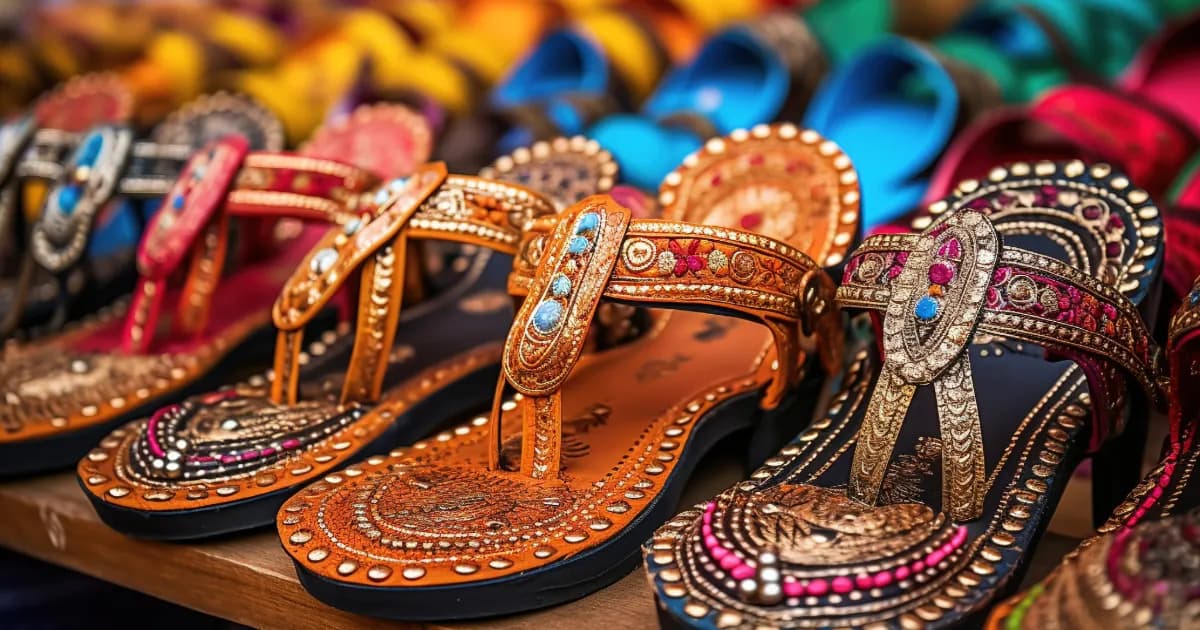
The Kolhapuri Chappal is more than just a pair of sandals; it’s a tangible piece of Indian heritage, a testament to centuries of skilled craftsmanship, and a symbol of robust simplicity. Born in the rugged terrain of Maharashtra's Kolhapur district, these handcrafted leather sandals were once the quintessential footwear of farmers, villagers, and daily labourers, prized for their unparalleled durability and ability to withstand the harshest conditions. They were the footwear of the earth, rooted in practicality and designed for a life lived close to the soil.
Fast forward to 2025, and the Kolhapuri Chappal has undergone a quiet yet profound revolution. It has transcended its humble origins, stepping confidently onto urban streets, fashion runways, and social media feeds, becoming a staple for the style-conscious individual. The journey from rural staple to urban chic is a fascinating narrative of adaptation, innovation, and a renewed appreciation for authentic Indian craft.
Then: The Unassuming Workhorse of Rural India
In their nascent years, dating back to the 12th century, Kolhapuris were designed for functionality above all else. They were sturdy, heavy-soled, and often made from thick buffalo hide, sometimes weighing as much as 2 kilograms per pair. Their primary purpose was to protect feet from rough terrain, heat, and the rigours of agricultural life.
Traditional Styling - A Reflection of Functionality and Simplicity:
With Traditional Attire: Kolhapuris were primarily paired with traditional rural attire. For men, this meant dhotis, lungis, or simple cotton trousers and kurtas. For women, they complemented unpretentious cotton sarees or everyday ghagras.
Earthy Palette: The dominant colour was the natural, earthy tan of vegetable-tanned leather. Any embellishments were minimal – perhaps some simple braiding, a subtle toe loop, or basic geometric cuts. The focus was on the raw beauty of the leather and the integrity of the construction.
Durability Over Daintiness: These chappals were built to last, often passed down through generations. They molded to the wearer's foot over time, offering unmatched comfort that came from wear, not from immediate plushness. Their rugged, chunky appearance was a direct reflection of their purpose.
Contextual Wear: Kolhapuris were everyday footwear, suitable for long walks to the fields, market visits, or local gatherings. They embodied a simple, grounded lifestyle, rarely seen as a 'fashion statement' but rather a practical necessity. Styles were often specific to the village of origin – Kapashi, Paytaan, Kachkadi, Pukri – each with subtle differences in form and construction.
The essence of the Kolhapuri then was its unpretentious utility, its deep connection to the land, and the quiet dignity of the artisanal hand that crafted it. It was a testament to enduring quality in a world of fleeting trends.
Now: The Versatile Icon of Urban Chic
The 21st century has seen a dramatic reinterpretation of the Kolhapuri. While its core elements of handcrafted leather and unique design remain, its aesthetic and styling applications have expanded exponentially. The driving forces behind this evolution include a growing appreciation for sustainable and handmade products, a desire for fusion fashion, and the omnipresent influence of social media.
Modern Styling - A Canvas for Personal Expression:
Fusion with Western Wear: The Unexpected Harmony This is perhaps the most striking shift. Kolhapuris are no longer confined to ethnic ensembles.
Denim & Desi: One of the most popular pairings now is with jeans – be it straight-fit, distressed, or even flared denim. A classic tan or black Kolhapuri effortlessly elevates a simple jeans-and-tee combination, adding an understated bohemian or global desi vibe.
Chic Dresses & Skirts: Flowy maxi dresses, midi skirts, and even tailored culottes find a perfect counterpart in Kolhapuris. This pairing creates an effortlessly chic, comfortable, and unique look, suitable for brunches, casual outings, or even semi-formal daytime events.
Tailored Trousers & Co-ords: For a refined yet relaxed look, men and women are pairing Kolhapuris with ankle-length tailored trousers, linen pants, or structured co-ord sets. This brings an artisanal touch to contemporary office wear or sophisticated evening gatherings.
Shorts & Resort Wear: Kolhapuris are increasingly seen with shorts or resort wear, offering a comfortable and stylish alternative to flip-flops or sneakers, perfect for travel or leisurely strolls.
Elevating Indian Attire: A Contemporary Twist While still a natural fit for Indian wear, the styling has become more intentional and experimental.
Modern Kurtas & Tunics: Instead of traditional salwar-kameez sets, Kolhapuris are frequently paired with contemporary cuts of kurtas, asymmetric tunics, or even kurta-dresses, adding an earthy elegance.
Sarees Reimagined: The saree, India's timeless garment, is often styled with modern Kolhapuris. This can range from traditional cotton sarees for daily wear to silk or georgette sarees for festive occasions, where the chappal provides both comfort and a touch of grounded authenticity.
Lehengas & Festive Flair: For festive occasions and even weddings (especially sangeet or mehndi ceremonies), embellished Kolhapuris with cushioned soles and slight heels are becoming a popular choice. They offer comfort for dancing and mingling, without compromising on traditional glam.
Innovations in Design: Catering to the Urban Aesthetic The artisans and designers have also adapted the Kolhapuri to meet urban demands without losing its soul.
Vibrant Hues & Embellishments: While tan remains a classic, Kolhapuris now come in a kaleidoscope of colours – deep maroons, emerald greens, mustard yellows, serene pastels, and metallic finishes. Embellishments include subtle zari work, delicate braids, intricate cutwork, mirror work, and even contemporary abstract patterns.
Comfort Enhancements: Recognizing the need for urban comfort, many modern Kolhapuris feature padded footbeds, cushioned soles, and improved arch support, making them suitable for prolonged wear on city pavements.
Heels and Wedges: A significant evolution has been the introduction of slight block heels or wedges. This transforms the flat chappal into a more formal or height-enhancing option, further expanding its versatility for both men and women.
Variety in Straps and Toe Loops: While the T-strap and toe loop are iconic, variations exist with broader straps, multiple criss-cross straps, or even sling-back styles, offering diverse aesthetic choices.
The Kolhapuri as a Statement of Conscious Fashion In today's fashion landscape, ethical consumption is gaining paramount importance. The Kolhapuri, by its very nature, fits perfectly into this narrative.
Sustainable Choice: Crafted from natural leather, often vegetable-tanned, and entirely handmade, Kolhapuris are inherently a slow fashion item. Their durability means less frequent replacement, reducing waste, making them a conscious alternative to mass-produced footwear.
Support for Artisans: Choosing an authentic Kolhapuri directly supports generations of skilled artisans, ensuring the continuation of a vital traditional craft and its associated livelihoods. This ethical dimension resonates deeply with a growing segment of urban consumers.
Uniqueness & Individuality: In a world saturated with fast fashion, a handcrafted Kolhapuri offers a distinct sense of uniqueness. Each pair, with its subtle imperfections and artisanal touch, tells a story, allowing the wearer to express individuality and a connection to heritage.
The Footprint of Change
The journey of the Kolhapuri Chappal from a rural necessity to an urban fashion icon is a microcosm of India's evolving relationship with its own heritage. It reflects a generation that is proud of its roots yet unapologetically modern in its expression. The internet and social media have played a crucial role, allowing artisans to connect directly with consumers and enabling fashion enthusiasts to share innovative styling ideas, transforming Kolhapuri's perception.
The recent global spotlight on the Kolhapuri, though often fraught with appropriation debates, has ironically served to amplify its story, compelling more Indians to rediscover and re-embrace this timeless footwear. It's a testament to the enduring power of authentic craft and the boundless possibilities when tradition meets modern interpretation. The Kolhapuri Chappal doesn't just adorn the foot; it walks the line between past and present, culture and commerce, rural charm and urban chic, defining a truly unique Indian street style revolution.
