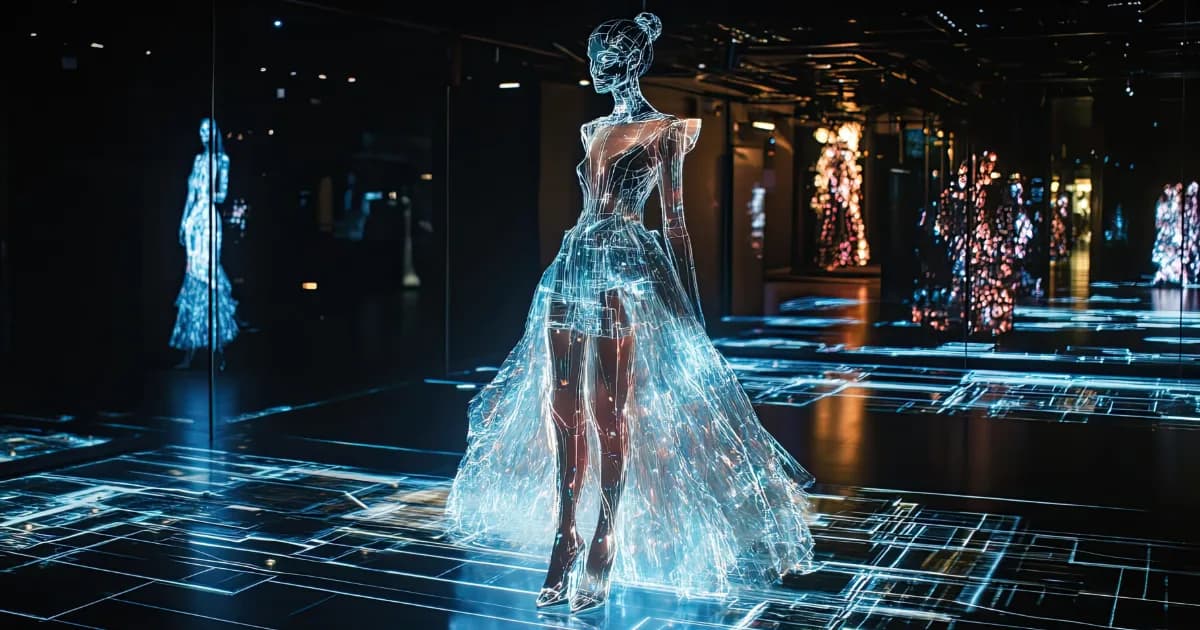
Reinventing the Runway: From Reality to Virtual Dimensions
Fashion has always been about evolution. From Paris’s haute couture houses to Milan’s iconic runways, the industry thrives on innovation. Today, that innovation has transcended fabric and thread, stepping into a world built from pixels and code — the metaverse.
The rise of Digital Fashion Week has redefined the way designers, models, and audiences experience fashion. No longer limited by physical space or location, the runway now exists in a limitless, interactive environment, accessible to anyone with an internet connection.
This new era blends artistry and technology, merging design, animation, and virtual storytelling. Here, couture meets code, and creativity knows no physical boundary.
How the Metaverse Is Transforming Fashion Weeks
The metaverse serves as a digital universe where people can socialize, shop, and showcase style in immersive 3D worlds. Major fashion houses like Balenciaga, Gucci, and Dolce & Gabbana are already experimenting with digital fashion presentations inside virtual spaces.
During Digital Fashion Week, designers can host shows that feature avatars walking down virtual runways wearing pieces that may never exist in physical form. The experience is interactive, allowing audiences to zoom in on fabrics, view intricate
Virtual runways also enable brands to experiment with avant-garde silhouettes, such as reimagined
Accessibility and Global Reach
Traditional fashion weeks are exclusive events with limited seating and high barriers to entry. By contrast, Digital Fashion Week democratizes fashion access. Anyone, from a fashion student in Mumbai to a stylist in Paris, can attend through VR headsets or online streaming platforms.
This global accessibility is fostering cultural exchange like never before. Designers can now incorporate elements from different regions — from Indian Zari work and handcrafted embroidery to Western silhouettes like the corset blouse — all showcased in real time on a shared digital platform.
Moreover, audiences can interact directly with brands during the show. They can ask questions, share reactions, or even purchase limited-edition
The Rise of Digital Couture and NFTs
Digital couture is one of the defining movements of modern fashion. Designers create stunning virtual garments using advanced 3D modeling tools, powered by artificial intelligence and motion capture.
These digital creations often feature hyperrealistic textures — from shimmering silk to handwoven Zari work — blending traditional craftsmanship with futuristic presentation.
Brands like The Fabricant and Tribute Brand are pioneers of this space, offering exclusive digital pieces that consumers can “wear” online via augmented reality or virtual avatars. Each piece is often minted as a Non-Fungible Token (NFT), ensuring authenticity, rarity, and ownership.
The NFT ecosystem adds a new layer to fashion commerce. Instead of buying a physical dress, consumers invest in a one-of-a-kind digital garment they can showcase across platforms in the metaverse.
Inclusivity and Diversity: Breaking Barriers in Virtual Spaces
Perhaps the most revolutionary aspect of Digital Fashion Week is its embrace of gender inclusivity and diversity. Traditional runway models often conform to narrow standards of beauty. In contrast, the digital realm allows for infinite representation.
Avatars can be customized to reflect any gender identity, ethnicity, or body type. Designers are also moving toward unisex digital collections, emphasizing fashion as a universal form of self-expression.
For example, a single digital corset blouse design can be worn by avatars of any gender, reinterpreting the garment’s historic association with femininity. This flexibility highlights fashion’s evolving role as a platform for inclusivity and cultural expression.
In a digital world, representation isn’t just encouraged—it’s infinite.
Bridging Tradition and Technology
While Digital Fashion Week is futuristic, it’s also deeply rooted in tradition. Many designers are using the metaverse as a canvas to reinterpret cultural heritage. Indian designers, for instance, are incorporating Zari work, brocade textures, and handloom-inspired weaves into virtual collections.
Imagine a digital lehenga with intricate Zari work glimmering under simulated light, or a virtual brooch pinned delicately on an avatar’s jacket—each detail preserved with pixel-perfect precision.
Such innovations are allowing heritage craftsmanship to thrive in a modern context. By preserving traditional art forms digitally, designers ensure that techniques like Zari embroidery remain relevant in the age of digital fashion.
The Role of Technology in Design and Presentation
The backbone of Digital Fashion Week lies in cutting-edge technologies such as 3D modeling, motion capture, augmented reality (AR), and virtual reality (VR).
3D Design Software: Platforms like CLO3D and Blender allow designers to craft hyper-realistic clothing that moves naturally with virtual bodies.
AI-Powered Styling: Algorithms predict upcoming trends and suggest new combinations, blending aesthetic sensibility with data-driven accuracy.
Motion Capture: Digital models replicate real human motion, ensuring that every step, twirl, and pose feels authentic.
Interactive Environment: The interactive environment of the metaverse enables participants to engage directly—clicking on details, changing lighting, or viewing garments from multiple angles.
Together, these technologies redefine the essence of runway storytelling—making it more immersive, sustainable, and accessible.
Sustainability in the Digital Age
Fashion’s shift to digital platforms also supports sustainability. Traditional fashion weeks require travel, logistics, and material use that significantly increase the industry’s carbon footprint. Digital fashion shows, on the other hand, operate with minimal environmental impact.
Virtual garments don’t require textiles, dyes, or production waste. Designers can experiment freely without generating excess fabric or emissions. Moreover, virtual fittings reduce the need for physical samples, optimizing both cost and resource use.
By integrating traditional elements like Zari work into digital clothing, designers preserve craftsmanship without the environmental toll of physical production.
This digital sustainability is redefining what “eco-conscious” means in the fashion world.
The Economic Evolution of Fashion Weeks
Beyond creativity, Digital Fashion Week introduces new business models. Virtual tickets, NFT collectibles, digital brooches, and branded metaverse experiences all create fresh revenue streams.
Brands are also partnering with tech giants and gaming companies to host interactive fashion spaces within platforms like Decentraland, Roblox, and Zepeto.
Attendees can customize avatars, purchase virtual collections, and even interact with designers post-show. This fusion of commerce, entertainment, and technology is reshaping how fashion engages consumers.
For younger generations, owning digital fashion is as valuable as owning luxury physical items. This shift in consumer behavior will define how fashion houses adapt to the digital economy.
Cultural Fusion and Digital Storytelling
Fashion has always been about storytelling, and in the metaverse, this narrative becomes even more dynamic. Designers are using digital tools to create multisensory experiences that merge global cultures.
Imagine a virtual runway where an avatar in a structured corset blouse walks alongside another wearing an outfit inspired by Indian Zari work, while holographic brooches shimmer under neon skies. Music, lighting, and animation synchronize to tell a story that transcends geography.
In this
This immersive experience bridges culture, technology, and emotion, proving that fashion’s essence isn’t lost in translation—it’s amplified.
Challenges Ahead: Authenticity, Ethics, and Creativity
While Digital Fashion Week is groundbreaking, it also presents new challenges. The virtual realm’s limitless potential can sometimes blur authenticity. Questions arise about intellectual property—who owns a digital design, and how do we protect it from replication?
Moreover, maintaining emotional connection in a digital format can be complex. While avatars and virtual models exude glamour, the tactile experience of fabric and craftsmanship remains irreplaceable.
However, hybrid fashion weeks that merge physical and digital shows are emerging as a balanced solution—preserving authenticity while embracing innovation.
Ethical considerations around
The Future of Runways in the Metaverse
The
Designers now view digital fashion not as an alternative but as an extension of creativity. Corset blouses inspired by history can coexist with AI-generated fabrics. Zari work can find a home in pixelated couture. And a single brooch can become a statement piece in both the real and virtual world.
The fashion runway has transcended geography, season, and exclusivity. The metaverse has become fashion’s most exciting new frontier—a stage without limits, an interactive environment where imagination rules.
In this bold digital era, the future of fashion isn’t just being worn—it’s being coded, shared, and experienced in ways humanity has never seen before.
